

The long read
Greenwich Works, explained in full
Everything the front page draws, here in words: for a first-time reader, a parent, a client, or a colleague who wants the detail.
In one minute
Greenwich Works, for someone meeting it for the first time
- What it is
- A change to how every undergraduate course at Greenwich University, Karachi is assessed, from this term. Instead of about fifteen small assignments a term, each marked once and thrown away, a student's courses share one real piece of work: the Folio.
- Who it is for
- 956 undergraduates in 198 teams; 71 more in nine group projects. Every course they take, and every teacher of those courses. Postgraduate programmes and level 7 and 8 courses are outside it and run as before.
- How it works
- A team of about five takes one real problem in the city, with a client, and builds something that exists by December. Its courses sit together in a Build Block with a convener. Each course marks the Folio from its own angle, out of 15; each student sits a three-minute viva, out of 5; the teacher's own quizzes and assignments are the other 10 of the sessional 30. The mid-term 30 and the final 40 are untouched.
- When
- Students begin at Session 5, Monday 12 October. The build runs from Session 7; the Folio goes in during the submission window, Saturday 12 to Wednesday 16 December; the vivas are in the Presentations & Viva (with Alumni Panel) week; every team shows its work at the Karachi Review on Monday 21 December.
Five chapters
Greenwich Works, explained
The problem it solves
Six courses used to mean about fifteen small assignments a term, each marked once, none worth keeping.
From this term, fifteen small assignments become one real piece of work in Karachi.

The team and the Folio
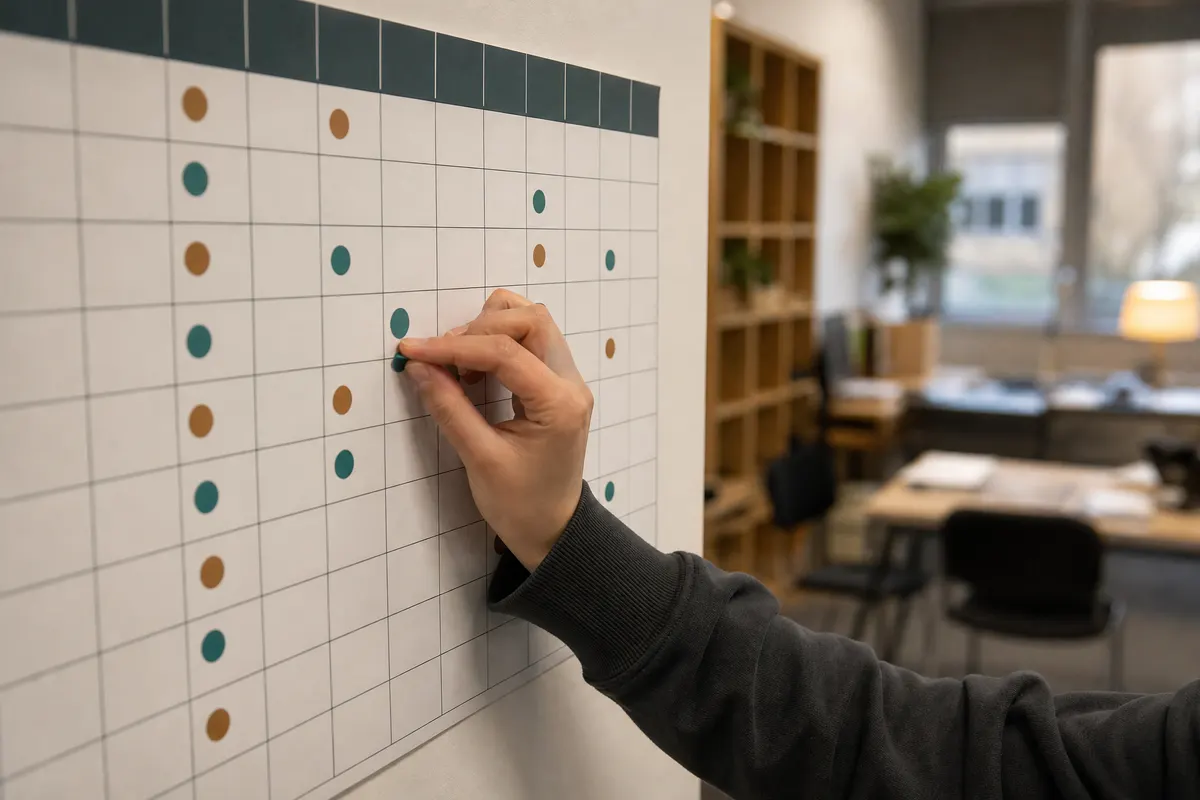
A team of about five takes one real problem in the city and makes one Folio.
Every shared course marks that same Folio from its own angle. One piece of work, not eight essays.

The marks
Every course is out of 100: sessional work 30, mid-term 30, final 40.
In an ordinary course the sessional 30 is the team's Folio 15, the student's own viva 5, and the teacher's quizzes and assignments 10. A course studied as a project keeps its project 30.

The term
Every course has 12 teaching sessions, 6 before the mid-term and 6 after. The work runs from Session 5 on Monday 12 October to the vivas in the Presentations & Viva (with Alumni Panel) week.
The full dates are below; every seat's page carries them too.
Who does what
The student: one team, one Folio, a viva of their own. The teacher: every one of the course's hundred marks.
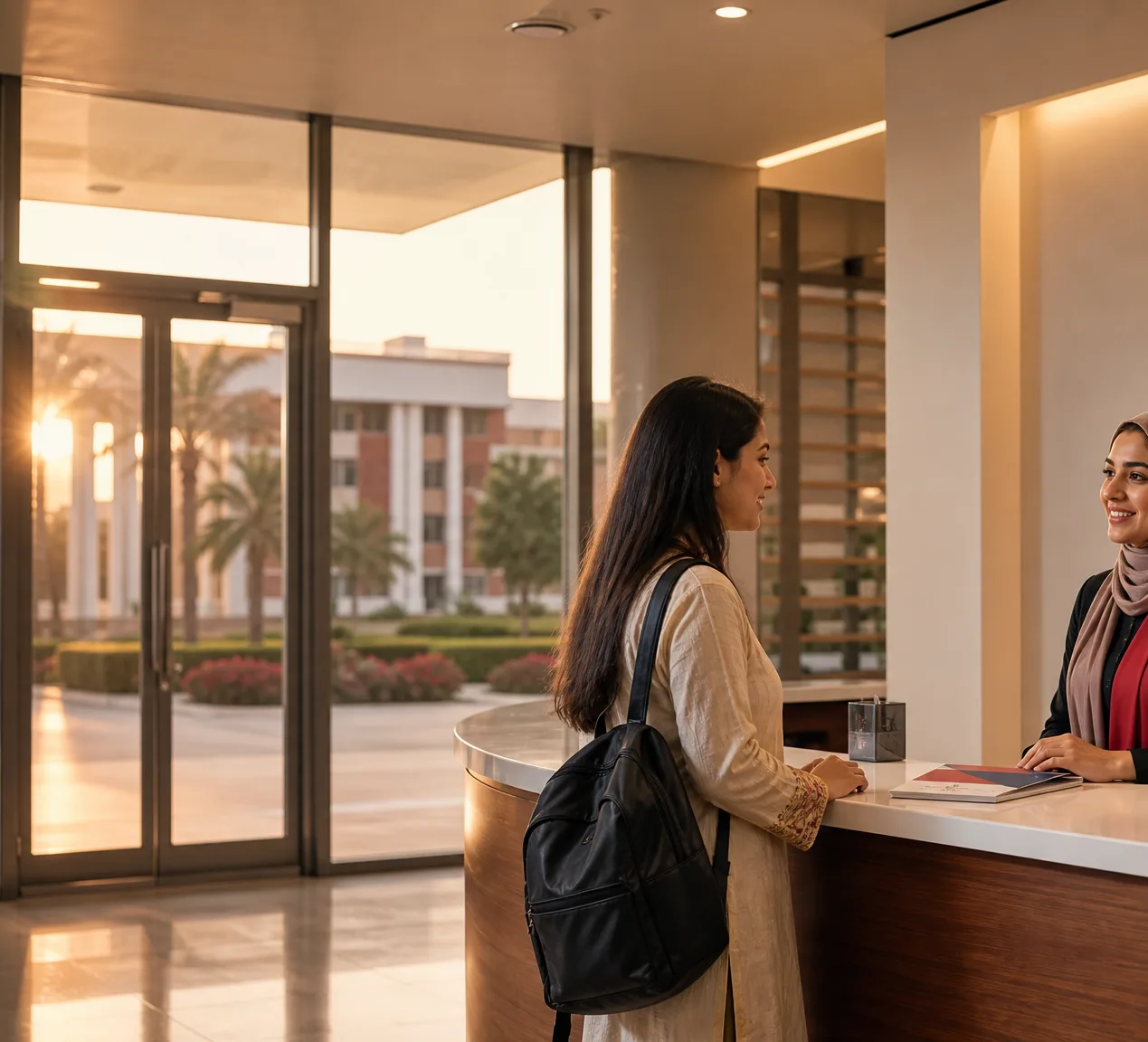
The convener: the block's projects, the merge, the gates and moderation, never a mark. The HOD or Dean: names the teachers and supervisors. The office: the front desk, the notices, the record. The VC chairs it.
Sixteen conveners hold nineteen Build Blocks. The Karachi Review is on Monday 21 December.
Words you will meet
Sixteen terms, each in three lines
- Greenwich Works
- The way every undergraduate course at Greenwich University is assessed from Fall 2026: one real piece of work in Karachi, made by a team, marked by every course the team shares. It replaces the fifteen or so small assignments a term used to bring.
- The Folio
- The one piece of work a team produces between Session 7 and Session 12: about 3,000 words per member plus whatever the project made, with a two-page client brief, a handover page for next year and an AI declaration. Handed in during the Folio submission window, Saturday 12 to Wednesday 16 December; nothing is accepted after Wednesday 16 December.
- Build Block
- The group of courses that share a timetable, and so share a Folio. There are nineteen. Each has a brief, a rubric, a list of projects and a convener.
- Convener
- The member of staff who holds a Build Block: approves the projects, merges what every course asks for into one document, keeps the gates and moderates. A convener never enters or changes a mark.
- Lane
- What kind of project a block runs. Civic: a study for a public body. Client: a piece of work for a named client. Venture: something launched and measured. Studio: something built and proven.
- The sessional 30
- Thirty of every course's hundred marks. In an ordinary course: the team's Folio out of 15, marked by that course from its own angle, plus each student's own viva out of 5, plus the teacher's own quizzes and assignments 10 (at least 3 quizzes and 2 assignments). The mid-term 30 and the final 40 are unchanged. A course studied as a project keeps its project 30.
- The viva
- Three minutes in class, one student at a time, in the Presentations & Viva (with Alumni Panel) week, out of 5: can this student explain the work? It is what makes a team mark fair, and why using AI is allowed and declared rather than banned.
- Lens note
- What a course sets a student when it does not mark that student's team Folio: about 3,000 words on the same project from that course's angle, on the same rubric, out of 15, plus a viva out of 5. No student writes more than two.
- A course studied as a project
- A course too small to run as a class. The student is supervised an hour a week, writes a piece of real work of their own on their team's problem, and defends it before a panel. Project 30, mid-term 30, oral defence 40.
- A course studied with a group
- Sixty-seven courses the Registrar does not offer as classes this term. Their students form nine groups, each on one real project for one client: three sittings with each course teacher in Sessions 4 to 6, then a chapter of the group's project.
- The sealed prediction
- What a team expects to find, written and sealed with its convener at Session 6 before any data is gathered, and opened at the first viva. It carries no marks; it shows what was learned.
- The ethics tiers
- Every project is screened at Session 6. Tier 1: the team certifies itself. Tier 2: the convener approves in writing. Tier 3: the ethics panel, which sits weekly from 6 October. No fieldwork before the tier is cleared and the field plan signed.
- The fieldwork gate
- Saturday 10 October, and only with the duty phone and the sign-out sheet in place. Care first: if someone is hurt, 1122, then the duty phone.
- Moderation
- After Session 12 the convener samples three Folios of the block. Two courses three or more marks apart, out of 15, means a re-mark. The mark itself belongs to the course teacher.
- The Karachi Review
- Monday 21 December: every team at its own table all day, the studies handed over to the bodies that asked for them, and a judging pair at each table for about eight minutes. Its score is advisory and never entered as a mark.
- The portal
- The working tool, for students and staff: teams, projects, hand-ins, marks, notices, the helper Rashid Bhai. This site explains; the portal does.
The term, in numbers
- 198teams956 students placed
- 19Build Blocks16 conveners hold them
- 172projectsreal problems in Karachi, with a client
- 245course outlineswritten and approved by the schools
- 9group projects67 courses studied with a group
- 21 Decthe Karachi Reviewevery team at its own table, all day
Every course out of 100
- 30sessional workthe team's Folio 15, the student's own viva 5, and the teacher's quizzes and assignments 10
- 30mid-termset and marked by the course teacher
- 40finalset and marked by the course teacher
The teacher's own quizzes and assignments (10: at least 3 quizzes and 2 assignments) continue alongside the Folio. A course studied as a project keeps its project 30.
One team's term, end to end
What the team, its teachers and its convener each do, session by session
| Session | The team | Each course teacher | The convener |
|---|---|---|---|
| Session 5Mon 12 Oct | Gets its personal brief and the block's project menu in class; reads the full projects in the portal; notes three. | Signs in to the portal; reads the block brief and the rubric. | Hands out the briefs, twenty minutes of a class; confirms every project and client by Friday 9 October. |
| Session 619 to 25 Oct | Makes its final choice, names itself, seals its prediction, answers the ethics sheet in class. | Nothing due; the teacher's own quizzes and assignments continue. | Approves or returns each choice; sets the ethics tier; files Tier 3 with the panel. |
| Mid-term week26 Oct to 1 Nov | Sits the mid-term as always. | Sets and marks the mid-term 30, as always. | Keeps the gates. |
| Session 72 to 8 Nov | The build begins: the team charter is in. It hands in its one-page plan, and a field plan if it will leave campus; fieldwork starts, in daylight, never alone. | Sends the course's asks for the Folio to the convener; receives the rubric with one row written for the course. | Merges every course's asks into one document; signs field plans. The weekly five-question check with every team in the field, from now to Session 12. |
| Session 1023 to 29 Nov | Shows a draft. | Ten minutes a team on the draft. | Samples three drafts and sends one message back to the block's teachers. |
| Session 127 to 13 Dec | Hands in the Folio in the submission window, Saturday 12 to Wednesday 16 December, with the client brief, the handover page and the AI declaration. | Marks the Folio 15 in the course's own dimension. | Samples three Folios for moderation. |
| Presentations & Viva14 to 19 Dec | Each student sits a three-minute viva in each class. Then Monday 21 December, the first day of the dead week (exam prep): the Karachi Review, all day, compulsory. | The viva 5 for each student; up to two marks from the team mark, with a reason. Sets and marks the final 40. | Ticks every team at its table on the 21st; orders a re-mark where two courses are three or more apart. |
The teacher's own quizzes and assignments (10: at least 3 quizzes and 2 assignments) continue alongside the Folio.Finals run 28 December to 3 January, after the dead week (exam prep), 21 to 27 December.
The term, dated
- Sat 10 Octthe fieldwork gate opens
- Mon 12 Oct, Session 5students get their personal brief and the project menu; the full projects in the portal
- Session 6, 19 to 25 Octfinal choice, team name, sealed prediction, ethics sheet
- 26 Oct to 1 Novmid-term week, after Session 6
- Session 7, 2 to 8 Novone-page plans; the merge; the build begins; the rubric
- Mon 9 NovIqbal Day: holiday; Monday classes made up Tue 10 Nov
- Session 12, 7 to 13 Decthe last teaching class
- Sat 12 to Wed 16 Decthe Folio submission window: all on time; nothing is accepted after Wed 16 Dec
- Presentations & Viva, 14 to 19 Decthe vivas in class; alumni viva panels, the main panel day Sat 19 Dec
- 21 to 27 Decdead week / exam prep: no classes; Mon 21 Dec, the Karachi Review
- 28 Dec to 3 Janfinals, after Session 12
Group sittings: Sessions 4 to 6; the supervisor's first meeting is in Session 6.
Nineteen Build Blocks
Every team sits in a block. Every block has a brief and a rubric.
A Build Block is the group of courses that share a timetable, and so share a Folio. Its convener holds the projects, the merge, the gates and moderation. Four lanes: civic: a study for a public body; client: a piece of work for a named client; venture: something launched and measured; studio: something built and proven.
 Client

Business Foundations Desk
skm. School of Business · sm. Education & Social Sciences
- Teams
- 40
- Students
- 198
- Projects
- 53
Held by Ali Saeed, Zaeem Farooqui, Rafia Khan, Dr Muhammad Asif Khan, Dr Nasreen Jawaid
 Civic

Foundation · The Karachi File
sm. Education & Social Sciences · Greenwich School of Computing · thrive School of Psychology · Greenwich Graduate School · skm. School of Business · ARY School of Media Studies
- Teams
- 38
- Students
- 179
- Projects
- 24
Held by Aisha Ismail, Eesha Ali Alvi, Maria Tahir
 Client

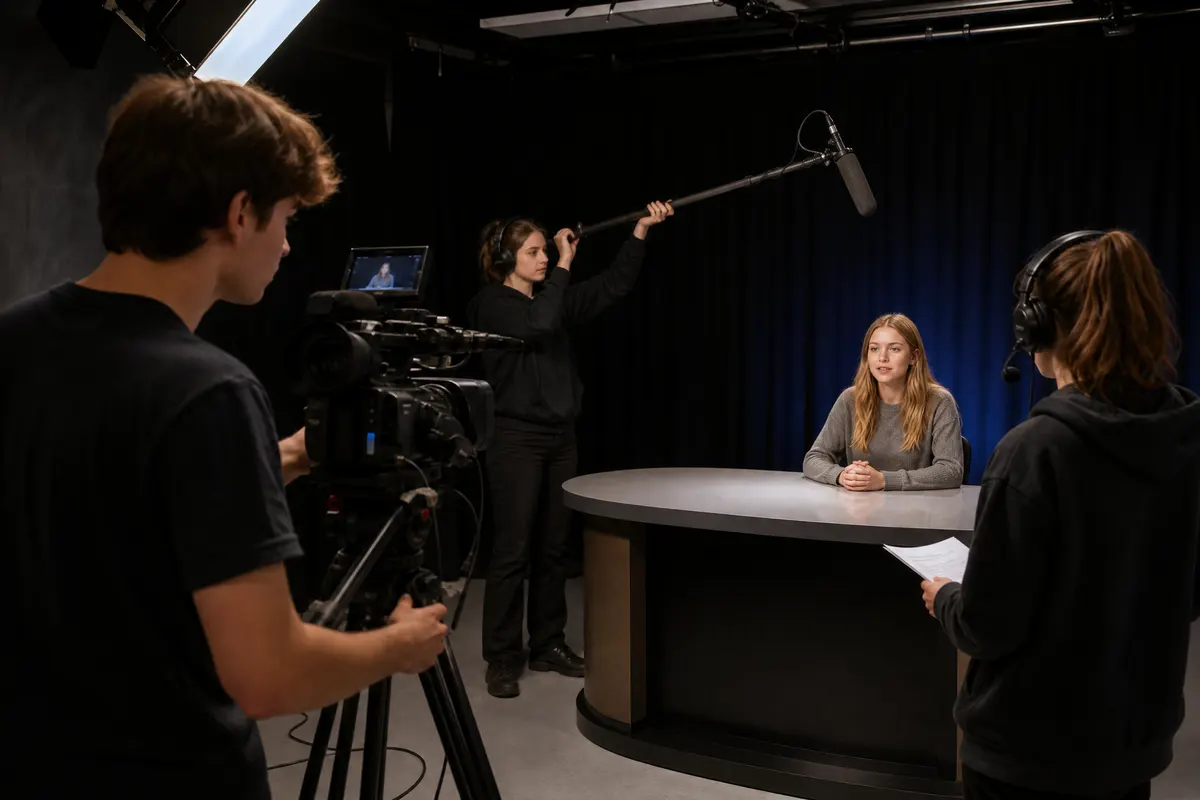
ARY Studio Brief
ARY School of Media Studies
- Teams
- 22
- Students
- 107
- Projects
- 13
Held by Dr Uzma Qazi, Tariq Baloch, Yasir Durrani
 Client
Business Core · Market-Entry Dossier
skm. School of Business · sm. Education & Social Sciences · thrive School of Psychology
- Teams
- 20
- Students
- 97
- Projects
- 13
Held by Ali Saeed, Zaeem Farooqui, Dr Arifa Saeed
 Venture
Digital Business Lab
skm. School of Business
- Teams
- 11
- Students
- 54
- Projects
- 6
Held by Rafia Khan
 Client
Campaign Studio
ARY School of Media Studies
- Teams
- 10
- Students
- 49
- Projects
- 6
Held by Yasir Durrani
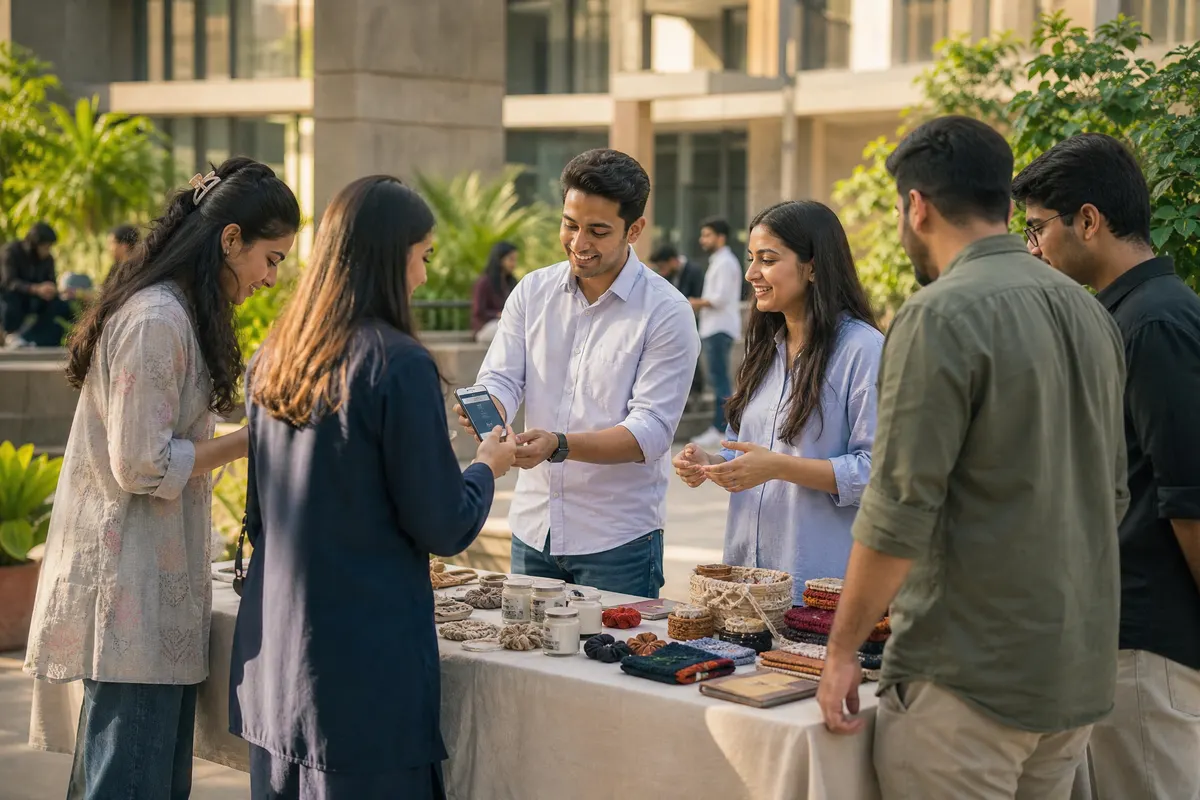 Venture
Enterprise & Money · Venture Launch
skm. School of Business · thrive School of Psychology
- Teams
- 9
- Students
- 44
- Projects
- 7
Held by Ali Saeed, Dr Nasreen Jawaid
 Client
Marketing & Numbers · Launch Case
skm. School of Business · sm. Education & Social Sciences · Greenwich School of Computing
- Teams
- 9
- Students
- 44
- Projects
- 6
Held by Maliha Khaqan
 Studio

Systems Build
Greenwich School of Computing
- Teams
- 8
- Students
- 38
- Projects
- 8
Held by Dr Nasreen Jawaid
 Venture
Fashion Studio
drft School of Fashion · curate School of Hospitality & Tourism · Greenwich School of Computing
- Teams
- 7
- Students
- 34
- Projects
- 4
Held by Ekra Mushtaq
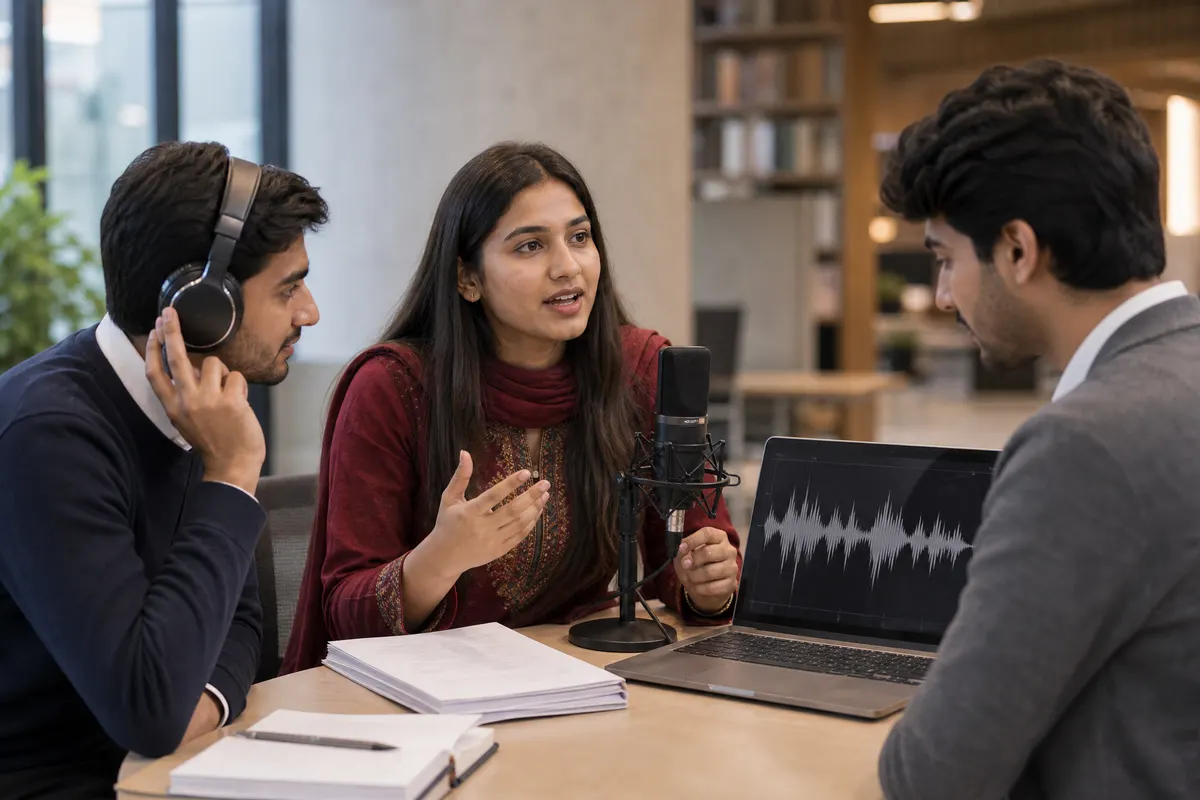 Studio
Machine & Language
Greenwich School of Computing
- Teams
- 4
- Students
- 20
- Projects
- 5
Held by Dr Nasreen Jawaid
 Studio

The Clinic
thrive School of Psychology
- Teams
- 4
- Students
- 18
- Projects
- 4
Held by Maria Tahir
 Client
Digital Reach Lab
ARY School of Media Studies
- Teams
- 3
- Students
- 15
- Projects
- 4
Held by Tariq Baloch
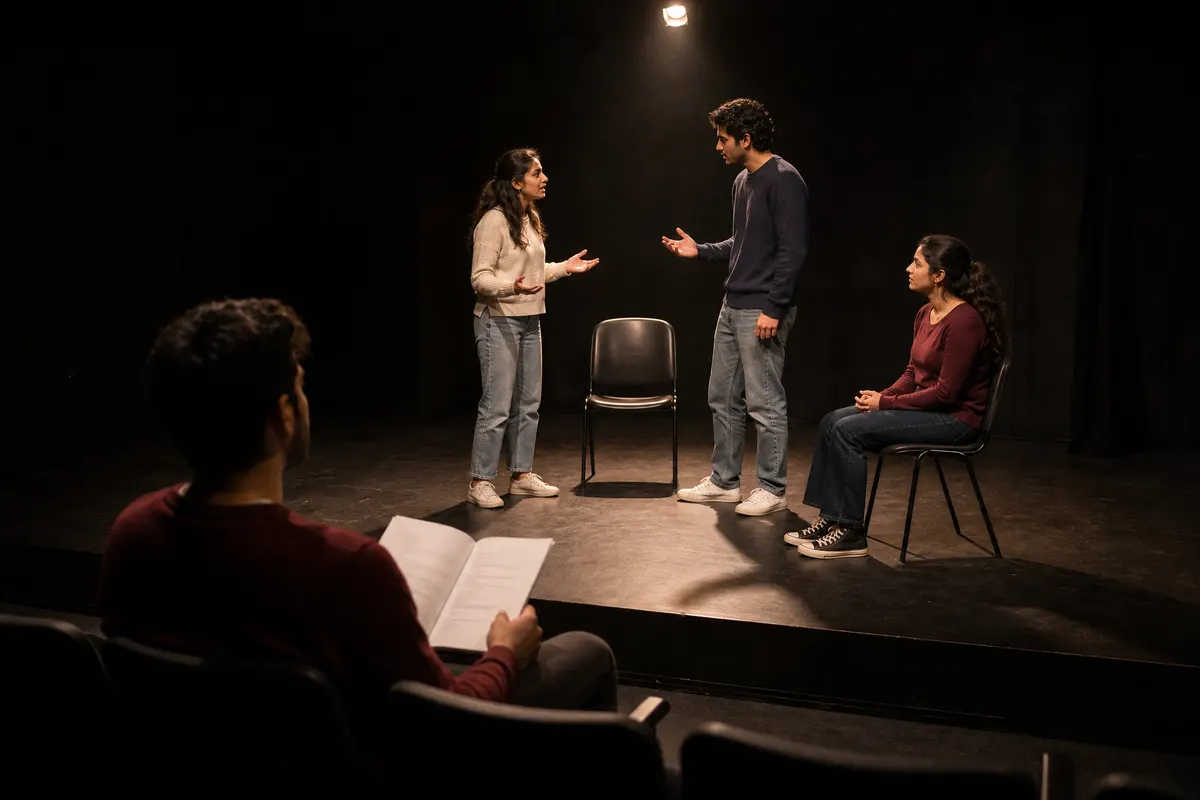 Studio
Screen & Stage
ARY School of Media Studies
- Teams
- 3
- Students
- 13
- Projects
- 3
Held by Dr Uzma Qazi
 Civic
sm Community Brief
sm. Education & Social Sciences
- Teams
- 3
- Students
- 13
- Projects
- 4
Held by Asma Khalid
 Venture
Applied Computing Studio
Greenwich School of Computing
- Teams
- 2
- Students
- 10
- Projects
- 4
Held by Dr Nasreen Jawaid
 Studio
Applied Psychology Practice
thrive School of Psychology
- Teams
- 2
- Students
- 10
- Projects
- 2
Held by Maria Tahir
 Client

Destination Pakistan
curate School of Hospitality & Tourism
- Teams
- 2
- Students
- 8
- Projects
- 3
Held by Asma Khalid
 Client
Future of Work
skm. School of Business
- Teams
- 1
- Students
- 5
- Projects
- 3
Held by Eesha Ali Alvi
Every project, with its client and its site, is on the projects site. Teams and students are the cut of 20 September; the portal holds the current count.
67 courses studied with a group
Nine group projects
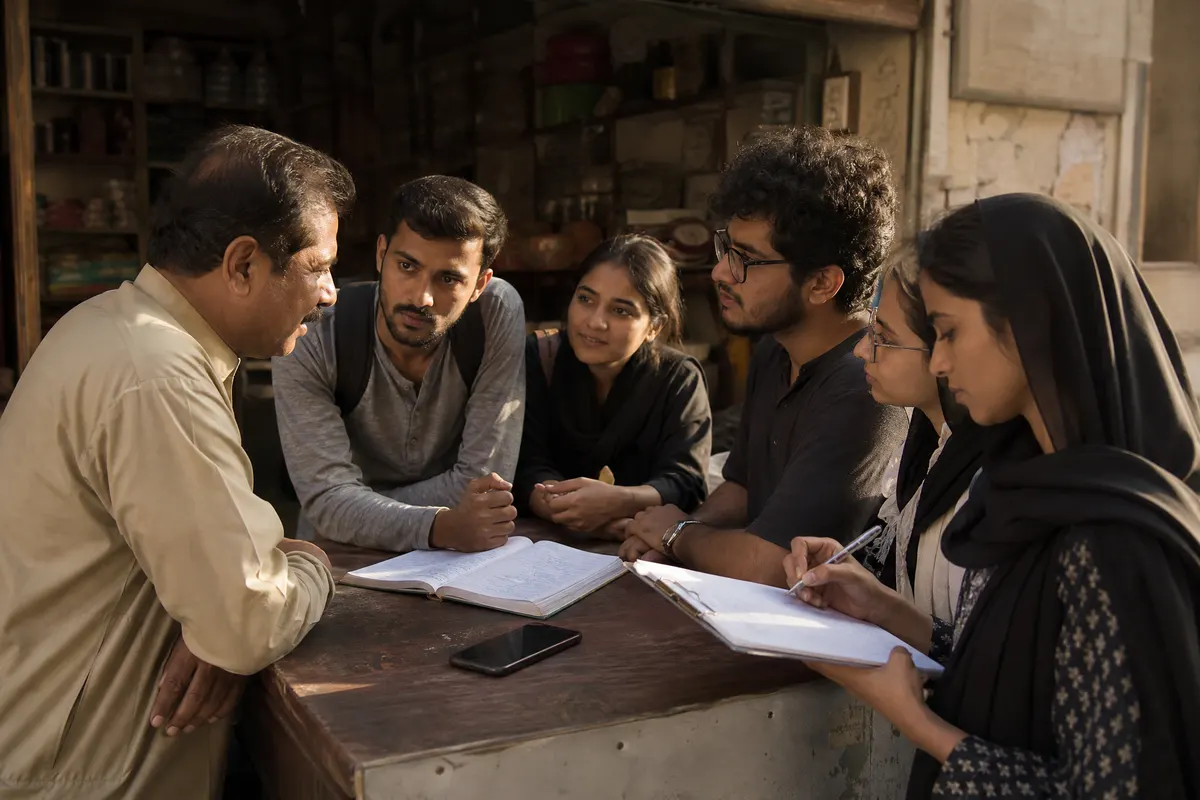
A course the Registrar does not run as a class this term is studied with a group: three sittings with the course teacher in Sessions 4 to 6, then a chapter of the group's project, marked by that course. One real project for a real client, one supervisor, one defence.
- G1
One firm's money
Economics and finance · skm School of Business
A Karachi firm borrows from three banks, pays for imports in dollars, hedges nothing, misses its compliance dates and has never had its money story written end to end. The owner runs it from a notebook.
12 courses · 8 students
- G2
One documentary, one bulletin
Media: film and broadcast · ARY School of Media Studies
A Karachi story worth ten minutes and nobody has shot it: the last projectionists of Saddar, a night at the fish harbour, the tram lines under the tarmac. The group chooses one in Session 5 (12–17 October) with the School and makes it properly.
12 courses · 12 students
- G3
One Karachi maker, launched
Media: design and brand · ARY School of Media Studies
The maker sells to middlemen at a third of the shelf price because the product has no name, no packaging, no page and no story. The group gives it all four and sells it once.
12 courses · 13 students
- G4
Karachi on the page
English literature and language · sm School of Education and Social Sciences
Karachi’s writing about itself is scattered across books, papers and translation; little of it is gathered where a Karachi undergraduate can hold it, and none of it is staged. The group edits a new anthology and reads it aloud.
11 courses · 16 students
- G5
One day in Karachi, sold
Tourism and hospitality · curate School of Hospitality and Tourism
Karachi has no bookable heritage day-tour a visitor can find online, pay for and trust. The group designs one, sells it, and runs it.
6 courses · 8 students
- G6
One firm's data
Business data and operations · skm School of Business
The firm has a year of sales, stock and payment records in three spreadsheets and a cash book, and makes every decision by memory. Nobody has looked at the data.
6 courses · 5 students
- G7
One workplace, studied
Psychology · thrive School of Psychology
People in the workplace are leaving or burning out and the employer guesses why. The group measures it and says what would help.
3 courses · 3 students
- G8
One service, built and proven
Computing · Greenwich School of Computing
One office keeps its records in a register and a WhatsApp group, and loses them. The group builds it a small service and proves it works.
4 courses · 4 students
- G9
How ajrak enters the mainstream
Fashion research · drft School of Fashion
Ajrak and the block print are everywhere in Karachi and almost never on a mainstream retail rail on their own terms. The two students research why and what a line that respects the craft would take.
1 course · 2 students
A project's road
Chosen, approved, cleared, built, filed, shown
Where a project waits, and where it ends. Every change in writing, with a reason.

Who runs it
A mark is never moved by this structure
Marks belong to the course teacher. Conveners moderate; the Steering Group rules; the office records. None of them marks.
- Dr Naveed Ahmed MughalChair; Vice ChancellorOwns the programme. Holds no block, so that the Chair never rules on his own moderation dispute. Every exception to the rules is minuted.
- Dr Rab NawazDeputy ChairApprovals, quality and the outside world: the pilot instrument, guest speakers and clients, the alumni who judge in December.
- The Core Coordination TeamDr Shair Sultan, Dr Ali Jillani, Dr Emad ul Karim, Ali Saeed, Aliza MoizOverall leadership: they watch all nineteen blocks, settle what crosses them and keep the standard. A teacher among them marks only their own courses.
- Sixteen convenersOne for each Build Block; four blocks are sharedNamed on every block card. Projects, the merge, the gates, moderation. Never a mark.
- The Greenwich Works officeAshir Azim, Michael, Shanzeh MughalPrint and distribution, the gates and the record, the student front desk. It decides nothing and records everything.
- The Steering GroupSix membersDecides the rules once, and every exception, minuted.
8 schools of the University take part: every one of their undergraduate courses this term.

Monday 21 December
The Karachi Review
Ten to five, across the whole campus. A thirty-minute handover of the studies to the bodies that asked for them; then every team at its own table, all day. A judging pair, a teacher and an alumnus, comes to the table for about eight minutes and scores there. The score is advisory: it goes to the courses marking that Folio and is never entered as a mark.
- Handover
- Thirty minutes, at the opening
- At the table
- About eight minutes a team
- The sheet
- Does it work 4 · is the claim supported 3 · did they answer 2 · would you take it outside 1
- After this day
- Nothing is accepted
For clients, partners and parents
What a client receives, and how to bring a problem
Every project names the body it reports to: a public authority, a firm, a school, a charity. It asks them for nothing but a named contact.
- By December
- A two-page client brief written for you, the thing the team built or found, and a handover page so next year's team can carry it on.
- 21 December
- An invitation to the Karachi Review, where the studies are handed over at the opening and every team shows its work all day.
- Money
- A client pays for nothing. Where a project needs spend, the client funds it or it is not done; venture teams are funded by the University.
- Bring a problem
- Write to the Greenwich Works office through the front desk, 021-111-202-303, or info@greenwich.edu.pk. A problem that fits a block can be added for the next term.
The papers
Everything a student was given, readable on a phone
The student handbook
What every student was told, in the order they meet it.
The student handbook, project courses
The pages for a course studied as a project.
A course studied as a project
The general guide: one-to-one supervision, a piece of real work, a defence.
Ethics and consent
The three tiers, the screening sheet, the consent forms in English and Urdu.
Fieldwork safety
Ten rules, three area grades, the field plan, the incident form, the duty phone.
Nineteen briefs, nineteen rubrics
One of each for every Build Block, linked from its card above.
The faculty and convener handbooks are in the portal, behind sign-in. Nothing here names a student.
Rashid Bhai answers
Questions people ask
The same answers the helper gives in the portal. Each one names the decision it comes from.
How is a student marked?
An ordinary course is out of 100: the Greenwich Works Folio 15, the Greenwich Works viva 5, the teacher's quizzes and assignments 10, mid-term 30, final 40. Your Folio (team's main work) is out of 15. Your viva (spoken test) and the charter can move it up to 2 either way. Your viva itself is out of 5. The teacher sets at least 3 quizzes and 2 assignments for the 10, and the mid-term and final, unchanged. Those stay in the University's own system. A course you study as a project is project 30, mid-term 30, oral final 40.
From the decision register: AG.1 · AG.2 · DA.4 · DA.5
Can two teams take the same project?
Yes, 2 teams may, but only on different sites or areas. That means a different neighbourhood, sample, sector or site. The portal refuses a third team outright. It refuses a site another team on that project already holds. So you note 3 at Session 5: if your first is full, take the second. The convener (team's staff lead) approves or returns every choice. An approved choice is locked until they reopen it.
From the decision register: AI.3 · AI.4
When can a team go out?
The gate (when going out opens) is Saturday 10 October at the earliest. It opens only if the Greenwich Works duty phone and sign-out sheet exist by then. The office opens it in the portal. No team leaves campus before both exist, whatever its ethics tier. Your tier must also be cleared, and your field plan, form F1, signed by your convener. Until then, use published sources.
From the decision register: AO.3 · X.3 · CW.4
What happens on 21 December?
Monday 21 December runs 10:00 to 17:00, across the whole campus. First, a 30-minute handover gives the studies to the bodies that asked for them. Then every team shows its work at its own table all day. A judging pair (a teacher and an alumnus) comes to your table. They score you there in about 8 minutes. The score is only advice for the courses marking your Folio. It is not entered as a mark. You must attend. Nothing is accepted after this day.
From the decision register: AA · AT.3
What happens on plagiarism?
Only the author is punished. Their section is taken out of the file. They are referred under the University's existing misconduct rule. The team mark is worked out again on what is left. The other members are told what happened. This works because every Folio section is named. Report it to your convener, who takes it from there.
From the decision register: AA (G11)
Who pays if a student is hurt?
Care comes first. Never delay treatment over who pays. Ring 1122 first. Then ring the Greenwich Works duty number. Police 15, Edhi 115, Chhipa 1020. Tell your convener the same day, even if nothing came of it. Your convener, or the front desk, takes it from there the same day. Once everyone is safe, file the incident form in the portal.
From the decision register: X.3 · AA (G9) · AE.39
Anything else: ask Rashid Bhai in the portal, or the front desk.